





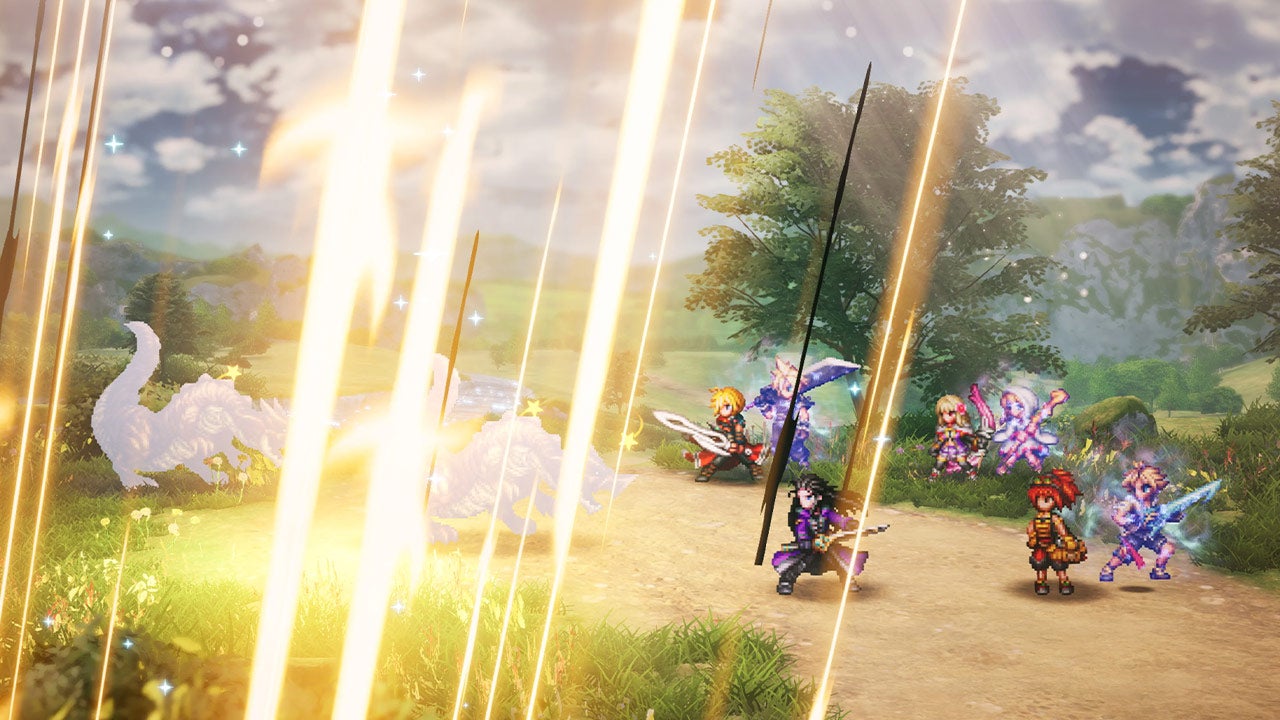
“The strongest moments are uplifted with some of the best cutscene work in HD-2D, wielding camera movement in a 3D plane effectively as character sprites and pixelized special effects coalesce through fluid animation.”
While the combat system occasionally lacks depth, it still offers tactical enjoyment, particularly in late-game challenges where enemies are more formidable. Players must manually rank up Visions, adding a layer of complexity to character development that proves crucial in tougher battles. The Visions, representing iconic Final Fantasy characters, bring a sense of celebration to the series’ history and provide unique abilities that enhance the gameplay experience. Staggering enemies unlocks bonus phases and Resonance attacks, though the transition from HD-2D to CGI cutscenes can be visually jarring.
Resonance’s narrative, while rooted in the classic Final Fantasy themes of crystal power and world-saving quests, struggles with pacing and depth. The dialogue often feels like it belongs in a young adult novel, lacking the punch needed for a compelling fantasy story. Characters like Rain, Lasswell, and Fina are crafted with potential, yet the storytelling doesn’t fully capitalize on this. Some characters, such as Nichol and Sakura, stand out with more developed arcs, while the Sworn Six and Dr. Lazarov fall short of engaging the player with their lackluster dialogue and motivations.
The game’s narrative momentum is hindered by a vague overarching plot, relying on regional subplots dealing with societal issues like environmental disasters and political oppression. While these elements are executed decently, the thematic coherence only emerges late in the game, leading to predictable resolutions. Nevertheless, the game excels in its artistic presentation, using HD-2D to create evocative worlds and deliver emotional cutscenes that transcend the limitations of the dialogue.
“Although I’m left underwhelmed by pieces of the storytelling itself, I’m glad Final Fantasy Resonance exists to revive Brave Exvius, but to also show that old-school style RPGs can keep raising the bar in more ways than one.”
Music plays a significant role in Resonance’s appeal, with a soundtrack that enhances the atmosphere of each setting and battle. The game remixes themes from Brave Exvius, blending genres to create memorable tracks that linger long after gameplay. The fusion of jazz, orchestral metal, and choir elements in boss themes exemplifies the innovative approach to the series’ musical heritage.
Ultimately, Final Fantasy Resonance is a testament to the enduring appeal of classic RPGs. While it may not fully capture the depth of its predecessors, it successfully harnesses nostalgia through its art style and gameplay. The journey it offers, despite its narrative shortcomings, is worth embarking on for fans of the genre. Resonance revitalizes Brave Exvius and demonstrates that traditional RPGs can continue to evolve, setting new standards in both visual and auditory storytelling.


Article Source: www.ign.com
